Paris Beyond the Postcard: 7 Surprising Truths About the City of Light
1. Introduction: The Paris Paradox
Paris is a city of layers, existing simultaneously as a cinematic dream and a dense, demanding metropolis. For many, the first encounter is a collision with "Paris Syndrome"—the jarring gap between the accordion-scored fantasy and the reality of aggressive scammers, navigating 20,000 steps a day, and the perceived chill of the locals. To find the real City of Light, you must move past the glossy surfaces of Gothic masterpieces and look toward the structural truths beneath. This is not a standard guide; it is a synthesis of historical deep-cuts and savvy survival tactics designed for the intelligent traveler.
2. The Medici Hand: How Italian Money Built French Icons
The "French" aesthetic tourists travel for was, in many ways, a purchased luxury. The Medici, often cited as one of the "five families that rule the world," functioned as the primary creditors to the French Crown. In the 16th century, they brought the macaron—now a French icon—from Italy to the Parisian court. By the 17th century, Marie de Medici initiated the development of the Champs-Élysées, envisioning the 17th-century tree-lined paths that would eventually define the city’s grand geometry. Authentic French culture has never been a static, insulated achievement; it began as a global blend funded by Italian debt.
3. The "Bonjour" Rule: Hacking the Myth of the Rude Waiter
The "rude French waiter" is a myth born of a protocol error. In Paris, social interaction is governed by a strict requirement of human acknowledgment. Every transaction—from ordering a café crème to asking for directions—must begin with a firm "Bonjour." This is not a greeting; it is a signal that you recognize the other person as a human being before the commerce begins.
"Just start every interaction with a quick 'Bonjour' and just speak to people like they are people." — Destination Well Known
What Americans perceive as neglectful service is actually the "apéro" culture—the national sport of people-watching where patrons are expected to sit for hours without being rushed. In France, the waiter's invisibility is a sign of respect for your time, not a lack of interest in your table.
4. Why the Eiffel Tower Was Almost Scrapped (The "Breadwinner" Logic)
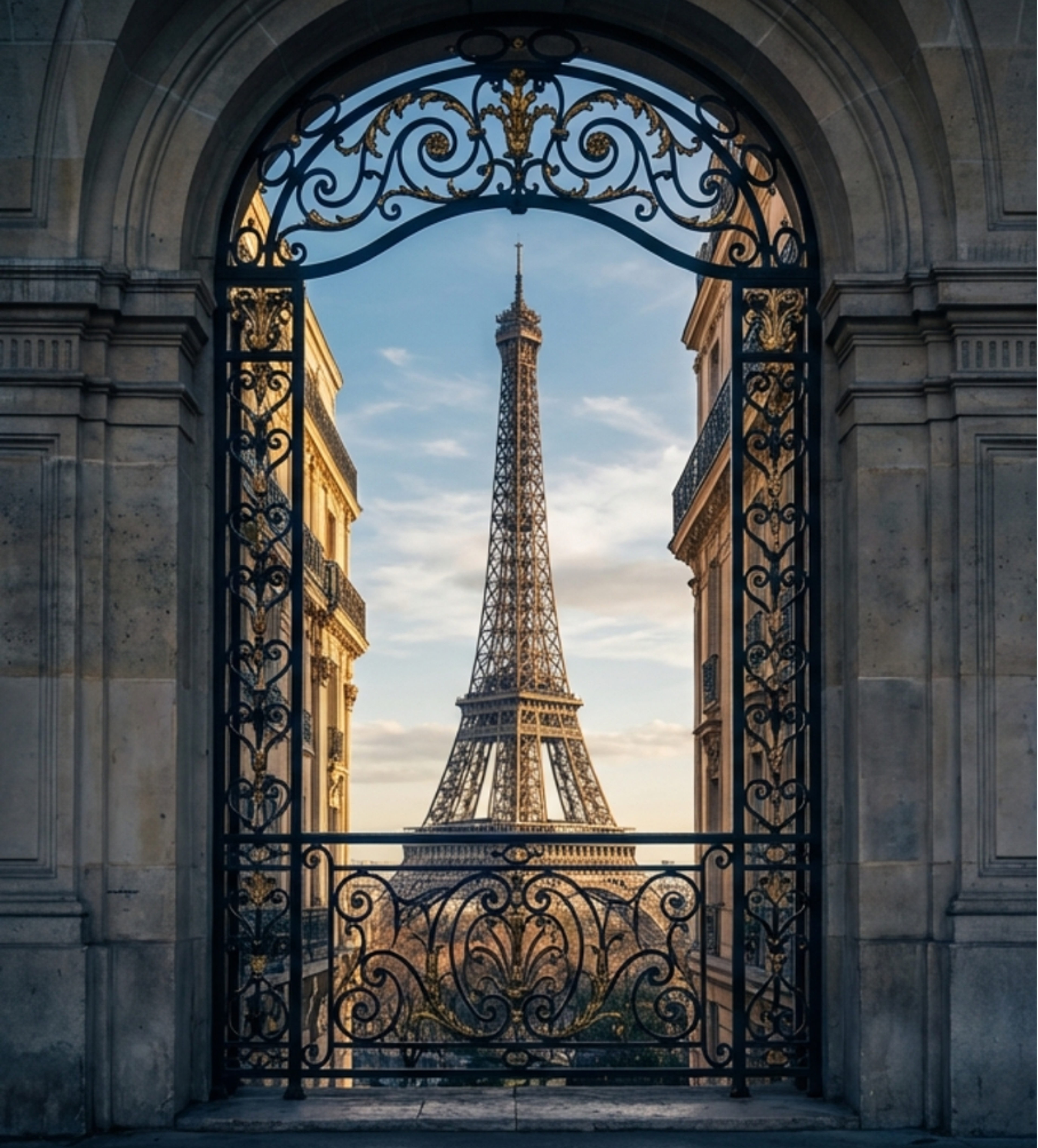
The Iron Lady was never intended to be permanent. Built for the 1889 World’s Fair to mark the 100th anniversary of the Revolution, the structure was a polarizing mass of 18,000 metal parts that the public initially loathed. The project overran its 6.5 million franc budget, eventually costing over 7 million francs.
The tower’s survival was purely pragmatic: it paid for three-quarters of its construction costs in its first five months of operation. This financial turnaround led the city to adopt what locals call the "ekmek teknesi" (the breadwinner) logic—you don't tear down a structure that effectively prints money.
5. The Literature Shield: How Victor Hugo Saved Notre Dame
Notre Dame de Paris is currently preparing for its grand reopening in December 2024, following the devastating 2019 fire. However, this is not the first time the cathedral has faced destruction. In the early 19th century, the building was a decaying ruin that officials were eager to demolish.
The landmark was saved by Victor Hugo, who wrote The Hunchback of Notre Dame specifically to rouse public appreciation for its architectural beauty. The power of his storytelling transformed a "crumbling pile of stones" into a national treasure, proving that literature can be a more effective preservation tool than any city ordinance.
6. Higher Isn’t Always Better: The 2nd Floor vs. Top Floor Debate
The instinct to buy the most expensive ticket to the Eiffel Tower’s summit is often a tactical error. At 9:30 AM, the top floor is frequently obscured by morning mist and clouds, making the high-priced ticket a gamble. The 2nd floor is arguably superior: it is less congested, less claustrophobic, and offers a clearer perspective on the city's architectural details.
There is also the "Irony of the View": from the top of the tower, you cannot see the most iconic feature of the skyline—the tower itself. For a 360-degree view that actually includes the Iron Lady, head to the rooftop of Galeries Lafayette. It is free, high-quality, and offers a better cinematic return on your time.
7. The Evolution of the "Friendship" Scam
While Paris remains generally safe, the "friendship bracelet" scam at the base of Sacré-Cœur has evolved into a more aggressive confrontation. Groups of up to 10 men may surround travelers, attempting to tie a string around your wrist before demanding payment.
Pro-Tip: Firm Refusal
- Scammers have become physically bold, often grabbing hands or arms to prevent you from walking away.
- The survival tactic: Maintain a firm "No" and keep your hands in your pockets. If grabbed, do not hesitate to firmly slap their hands away and continue moving. Do not engage in negotiation; speed is your best defense.
8. The "Bouillon" – The Original 18th-Century Fast Food
In the 1760s, the "Bouillon" emerged as a revolutionary concept: a place to serve "vigor and nutrients" to the masses with printed menus and set seating. Today, these halls are the best way to experience traditional French staples without the fine-dining markup.
At Bouillon Pigalle, a meal of steak frites or duck confit typically costs around €15. For a true insider experience, order the œuf mayonnaise—the restaurant actually won a prestigious competition for this specific dish. It is high-quality, traditional fuel for the modern traveler.
9. Conclusion: Finding Your Own Paris
The most rewarding Parisian itineraries are the ones that leave room for the unexpected. True "slow travel" happens in the covered passages of the 2nd arrondissement or on the movable green chairs of the Luxembourg Gardens. Paris is not a museum to be checked off a list; it is an atmosphere to be inhabited.
Will you spend your 48 hours rushing between crowded monuments, or will you find a quiet corner in a neighborhood like Batignolles to simply watch the world go by?