Beyond the Astronomical Clock: 5 Surprising Truths About Navigating Prague in 2026
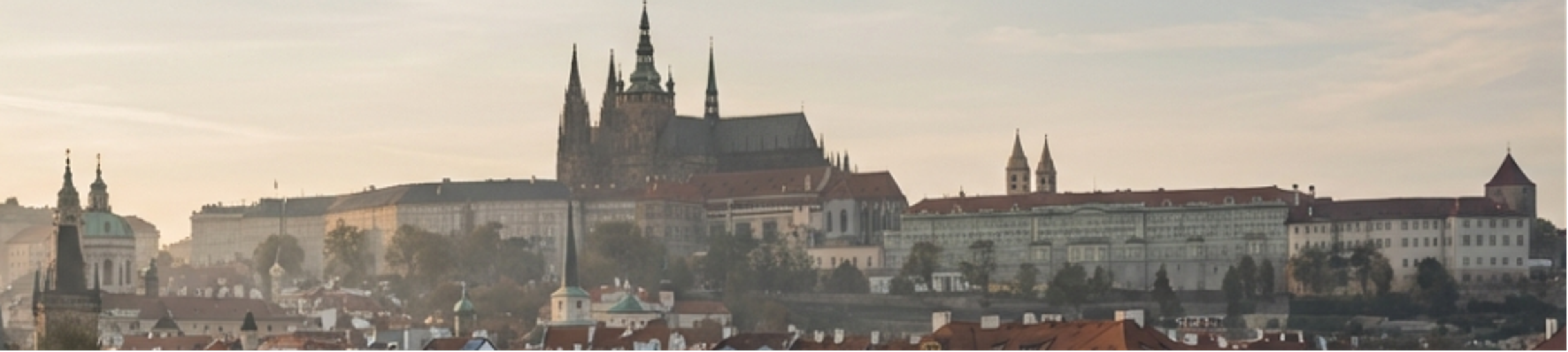
Prague is a city currently caught between two identities. To the casual observer, it remains a Baroque fairytale of red-roofed skylines and cobblestone charm. To the local, it is an urban battlefield where 22 million annual visitors descend upon a city of just 1.3 million, often reducing its historical soul to a backdrop for selfie sticks and overpriced ham. In 2026, however, the "City of a Hundred Spires" is staging a quiet rebellion. From banning pub crawls to incentivizing dawn-patrol sightseeing, Prague is attempting to reclaim its cultural dignity. To navigate it successfully, you must trade the tourist postcards for the critical eye of a seasoned investigator.
1. The 50% "Early Bird" Strategy (The 2026 Shift)
Prague’s authorities have recognized that over-tourism is a logistical nightmare. Their solution? A strategic "Early Bird" discount designed to pull the crowds away from the midday peak. For those willing to endure a 5:00 AM wake-up call, the reward is a city that feels empty and an admission price that is half off.
Between 9:00 AM and 10:00 AM (the first hour of operation), several iconic sites offer a 50% discount. This includes the Old Town Hall Tower, the Powder Gate, both the Old Town and Lesser Town Bridge Towers, and the St. Nicholas Church Tower. Crucially, in Spring 2025, the Novoměstská Tower is expected to join this list upon its reopening.
Even the city’s most famous resident has adjusted its schedule. One local insight captures the change:
"The clock keeper got tired of seeing disappointed faces at 8:00 AM and changed the schedule... you can now watch the Astronomical Clock show at 8:00 AM."
By arriving for the first chime of the day, you avoid the sea of "grumpy faces" and shoulder-to-shoulder crowds that define the square by noon.
2. The "Infinite" Book Tower and the Trap of Viral Aesthetics
If you’ve scrolled through TikTok, you’ve seen the "Idiom" book tower at the Municipal Library. It’s a 10-year-old art piece that recently became a victim of its own virality. Travelers now wait in lines for hours to glimpse what appears to be a bottomless well of 8,000 books. In reality, it is a clever optical illusion utilizing mirrors at the top and bottom.
A savvy explorer knows that three minutes of a mirror trick isn’t worth two hours in a queue. If you seek literary weight, look elsewhere. While the Strahov Monastery and the Clementinum house world-class libraries that you can only "admire from afar" to protect the frescoes, they offer a genuine historical gravity the book tower lacks. For a modern alternative with actual substance, head to the DOX Center for Contemporary Art to see the Gulliver Airship—a massive steel-and-wood reading room perched on the roof, designed to look like a crashed 20th-century dirigible. It offers space to sit and read, far from the social media bottlenecks.
3. The "100 Gram" Trap and the 1357 Mnemonic
The Old Town Square is a gilded trap, specifically when it comes to street food. Vendors selling "Prague Ham" use a pricing strategy based on 100g portions. It sounds cheap until the server carves a massive slab, and you find yourself paying nearly €40 (800+ CZK) for a single paper plate of meat. To find "Local Value," skip the medieval-themed stalls and visit the Manifesto Market, which offers a sophisticated, international food scene that feels like the real 2025 Prague.
As you move from the square toward the river, you’ll likely find yourself on the bridge. To impress the locals (and your travel companions), remember the mnemonic 1-3-5-7. This represents the year 1357, when construction on the Charles Bridge began—a sequence of odd numbers that is easy to recall. But stay vigilant:
"The infamous Karlova Street in Old Town is well known for its concentration of tourist traps and tacky absinthe shops; best not to spend too much time there."
4. Visual Rebellion: The Subversive Art of David Černý
Prague’s Baroque beauty is balanced by its gritty, surrealist public art, much of it the work of David Černý. His pieces are a visual rebellion against Czech history and modern identity.
In the Lucerna Passage, you’ll find "St. Wenceslas on a Dead Upside-Down Horse," a dark subversion of the traditional statue in Wenceslas Square. High above the streets of the Old Town, look for the "Hanging Freud" (Man Hanging Out). A sophisticated observer will notice the detail: Freud is dangling by one hand while the other is casually tucked into his pocket—a commentary on the philosopher’s own intellectual detachment.
Don't miss the 42-layer rotating Franz Kafka head in New Town, which mimics the writer's internal confusion, or the automated peeing statues in the Lesser Town. These works provide the essential "gritty reality" that contrasts with the city’s fairytale facade.
5. Why Vyšehrad is the "Better" Castle for 2026
While Prague Castle is technically the world’s largest, it is also a claustrophobic experience of security lines and expensive tickets. For first-timers who value "pockets of calm," Vyšehrad is the superior choice.
Located 2km south of the center, this 10th-century fort is largely free and offers spectacular views of the Vltava without the selfie sticks. It houses the Basilica of St. Peter and St. Paul (look for the relic of St. Valentine’s shoulder blade) and the Vyšehrad Cemetery, where the nation’s cultural luminaries are buried. It is the best place to witness a sunset while the rest of the city struggles for space on the Charles Bridge.
Conclusion: The Humidity Factor and the Death of Gems
If you are visiting in the colder months, ignore the thermometer. The "Winter Life-Hack" known by every local guide is that the wind and humidity from the Vltava River are the true enemies. Even if your layers are "on point," you will freeze if you don’t have thick-soled, waterproof shoes. Thin soles are a guaranteed failure on Prague's damp, frigid stones.
The city you see in 2026 is also a city of closures and transitions. The Petřín Funicular is closed for a futuristic redesign until Summer 2026, so prepare for a "sweaty uphill climb" if you want the views from the tower. Furthermore, the era of the "hidden gem" Paternoster lift is ending. The most famous doorless elevator near Old Town Square—once a free thrill—now carries a €10 (250 CZK) price tag and requires a supervised tour due to tourists' past behavior.
As Prague bans pub crawls and beer bikes to reclaim its "cultural dignity," the question for you remains: Do you want to see the Prague of the postcards, or are you willing to wake up at 5:00 AM to see the real city before it is hidden behind a sea of 22 million visitors?