Berlin’s Hidden Palimpsest: A Curator’s Guide to the City of Eternal Reinvention
Berlin is a city that demands more than a cursory glance. It is a profound study in contrasts, where the heavy shadows of a turbulent past are effortlessly eclipsed by a vibrant, avant-garde energy. To walk through Berlin is to traverse a landscape that was once a literal "death strip"—exemplified by the Brandenburg Gate, which stood isolated in a forbidden zone for thirty years—and has since blossomed into Europe’s most resilient cultural epicenter.
This is not a city that hides its scars; it treats them as a foundation for a creative future. To truly appreciate its depth, one must look beyond the standard itinerary and embrace the layers of a city that is always becoming, but never finished.
The Glass Dome of Democracy: Transparency at the Reichstag
The Reichstag is perhaps the most eloquent symbol of modern Germany. Once a site of fire and wartime ruin, its restoration represents a commitment to transparency. The addition of the massive glass dome allows the public to literally look down upon the proceedings of the Parliament (Bundestag) below—a deliberate architectural statement of political openness.
"The Reichstag stands as a symbol for the modern German democracy, having survived wars, fire, and the country's division to become one of Berlin's most iconic landmarks."
To witness this 360-degree panorama, one must navigate the city’s contemporary security with foresight. Access is complimentary, but you must register in advance with your full details and carry a valid ID for the rigorous security screening. It is a small price for a view that encompasses the very soul of the city.
The Emotional Architecture of the Holocaust Memorial
Near the Brandenburg Gate, the Memorial to the Murdered Jews of Europe offers a visceral, non-traditional encounter with history. There are no names or symbols here; instead, 2,711 concrete slabs of varying heights create a wave-like grid. As you wander deeper into the undulating paths, the ground slopes and the slabs tower overhead, evoking an intentional sense of being disoriented, lost, and dehumanized.
It is a masterpiece of "emotional architecture," forcing a physical confrontation with the scale of the genocide.
"The impact of the Holocaust isn't just what we're seeing, what we read, what we learn—it's much, much deeper."
The €3 Sightseeing Hack: Public Bus 100
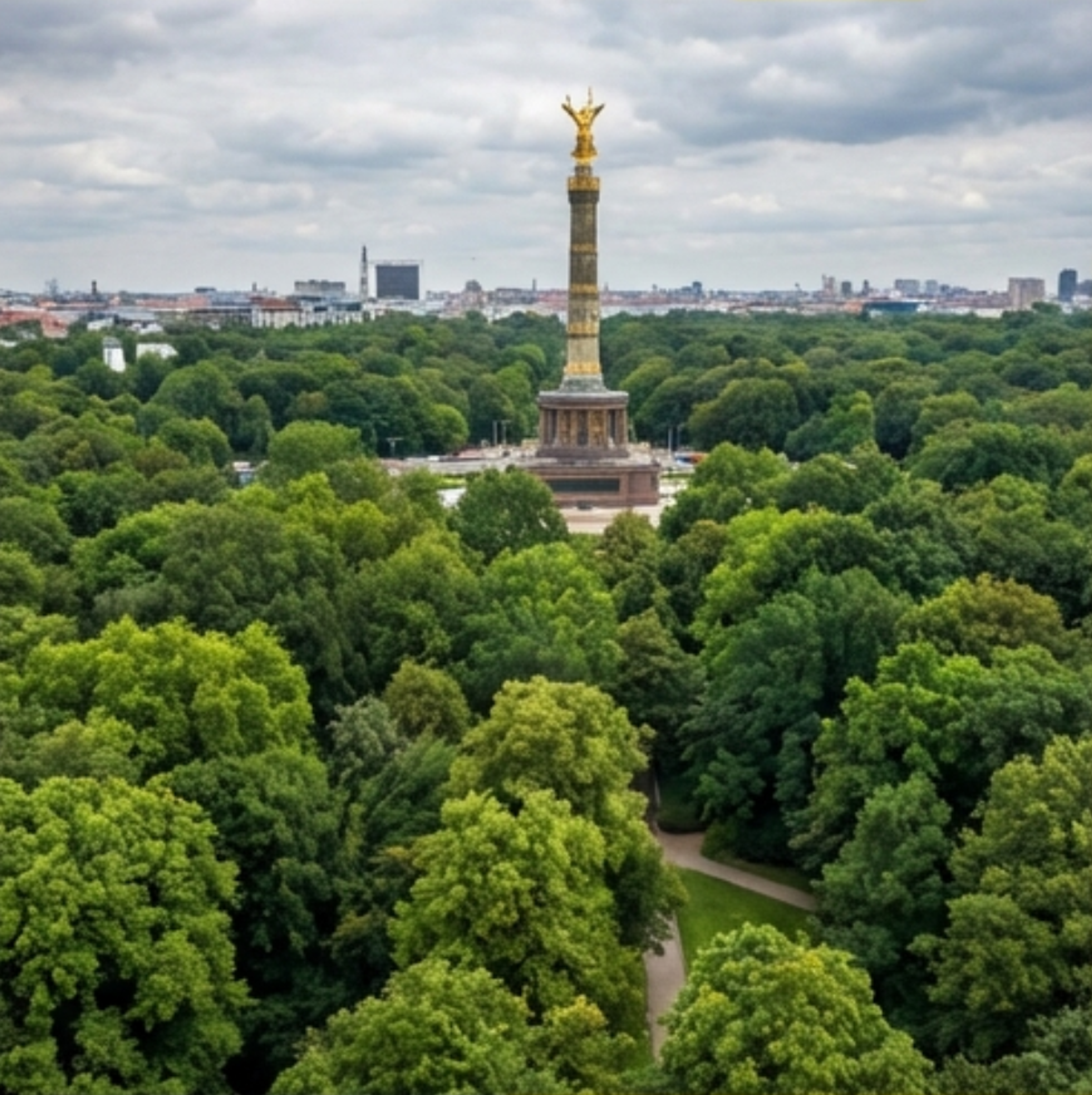
While the typical traveler may spend €25 on a "Hop-on-Hop-off" bus, the sophisticated voyager understands that Berlin’s best views are found on Public Bus 100. This local double-decker route winds past the "green lung" of Tiergarten, the Victory Column, and the ruins of the Kaiser Wilhelm Memorial Church for a mere €2.90 to €3.00.
- A Critical Curatorial Warning: Berlin operates on an honor system, but it is strictly enforced. You must stamp and validate your ticket at the small yellow machines on the bus or platform. Failure to do so can result in a €60 fine—a jarring end to an otherwise elegant afternoon.
For an immersive experience, download the City Pirates app, which provides a free, synchronized audio guide specifically for this route as you take a front-row seat on the upper deck.
Sanssouci: A Baroque Escape of Peaches and Bananas
For a respite from the urban hum, the UNESCO World Heritage site of Sanssouci Park in nearby Potsdam is essential. It is a "meticulously maintained" masterclass in Baroque landscaping, famous for its stunning terrace complex.
The true wonder of Sanssouci lies in its historical nurseries. In the 1700s, Frederick the Great achieved the improbable: cultivating exotic bananas, melons, and peaches in the harsh Prussian climate. Today, the park remains a sanctuary of over 230,000 plants and marble statues.
"Set away from the city's noise, this Baroque style garden offers a serene escape in nature, meticulously maintained based on historical designs."
The "Other" View: Panoramapoint vs. The TV Tower
The TV Tower (Berliner Fernsehturm) is an iconic skyline fixture, yet with entry prices around €23 and predictably long queues, it can often feel like a tourist trap. For a more curated experience, head to Panoramapoint at Potsdamer Platz.
Home to Europe's fastest elevator, Panoramapoint offers equally spectacular views at less than half the price. Once at the top, you can enjoy a coffee and a slice of cake at the cafe while contemplating the history of the square below. Locally, the savings are often measured in a unique metric of value: skipping the TV Tower grants you the budget for at least seven kebabs.
"Little Istanbul" and the Soul of Kreuzberg
To find the city’s modern pulse, one must visit Kreuzberg. Once a neglected border district, it was transformed by the "Guest Workers" of the 1960s into the vibrant "Little Istanbul."
The neighborhood’s charm is found in its sensory details: the clinking of beer glasses on the Admiralbrücke at sunset and the legendary queue at Mustafa’s Gemüse Döner. While the wait at Mustafa's is long, the fusion of chicken, toasted vegetables, and secret sauces is a quintessential Berlin ritual. For a modern contrast, the nearby Bikini Mall offers high-quality design and startups housed in wooden "pop-up" boxes, eschewing the over-commercialized feel of larger department stores.
"Everything here just works... it’s a real vibe that captures the friendship, optimism, and freedom of expression found in the new Berlin."
Conclusion: A City of Endless Reinvention
Berlin is a place where history is never buried; it is reimagined. It has moved from the darkness of the Führerbunker—now an unassuming parking lot—to the literal transparency of the Reichstag’s glass dome. This spirit of resilience is best viewed at the East Side Gallery, where the longest surviving stretch of the Wall has been reclaimed as a canvas for freedom.
As you depart, you are left to ponder: how can a city so marked by division emerge as a global beacon of unity? The answer is found in the very streets you’ve walked—a city that refuses to be defined by its past, choosing instead to wear its scars as a badge of creative triumph.